
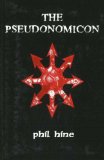
 The Pseudonomicon, by Phil Hine
New Falcon Publications, 1561841951, 64 pp. (incl. bibliography), 1996, 2004
This slim tome offers a living example of an approach to Lovecraftian magick and working with and within the Cthulhu Mythos.
Though it has its basis in fiction, the Cthulhu Mythos remains appealing not despite unfilled gaps, but because of them, as Hine notes. There remains some sense of otherness, mystery and even danger to the Mythos which is alluring and indeed devilishly attractive to those put off by the softer side of worship and magick
A true chaote, Hine states that he “cannot really see the point of magical approach which does not, at some point, risk derangement” (pg 48). Invoking Cthulhu surely invites madness, and therein lies great power, a concept many shamans would be familiar with. Yet insanity remains the last taboo.
In discussing banishing, Hine points out that “the issue is not so much that Cthulhuoid entities cannot be banished, but whether the concept of banishing itself is useful when approaching the magical landscape that Lovecraft has bequeathed us.”1 His alternatives are certainly workable.
The text includes descriptions of the Gods, lightly referencing other texts, a rite for ego death by ghouls which is deliciously garish, and a Cthulhu path-working.
Further, it provides a great starting place for anyone interested in working with such entities; more than a few ideas could be gleaned from this short, but fascinating text. Cthulhu lives.
- p. 23 [↩]